Showing posts with label Book Review. Show all posts

Friday, 16 November 2012

Review: Wool by Hugh Howey

Wool by Hugh Howey is an epic story of life, love and survival at all odds and one of the most-talked about and anticipated books of the year. It will be published on 3rd December and would definitely make an excellent Christmas gift. Below is a review from our youngest staff member, Angus.

I approached Wool (a five-part omnibus by the US bookseller Hugh Howey) with the appropriate amount of skepticism. The norm for the sci-fi genre is an over-imagined, barely believable world with a variety of half-baked characters who get so excited about their futuristic gadgetry that they forget their one true purpose - to enthrall, excite and challenge me. The setting and plot get too caught up in the unbelievable and the end result is a confounding mess of (literally) astronomical proportions. 

Fortunately for readers, writers and booksellers everywhere, Wool fails each and every one of the criteria mentioned above, providing a beautifully worked array of characters in a believable yet wonderfully creative world, intertwined throughout with innate, challenging questions that feed the conspiracy theorist in all of us - do we know the truth, or is the truth merely what we are made to believe? 
Sometimes, is it better not to know at all?

The story begins with the initial novella, originally intended to stand alone. It has a dark-edged, bleak, almost vintage sci-fi feel to it and one becomes immediately enveloped by the protagonist and his tortured quest for the truth. The story unfolds through flashbacks, as we follow Holston's journey and unearth the circumstances that lead to the dreadfully inevitable conclusion - we desperately hope that it is not so, however as the dark politics of Howey's world come to light we see there is no way out other than that which Holston chooses for himself. Howey does a splendid job of establishing the setting, manufacturing it in such a way that the true implications of the ensuing events can manifest themselves  in our minds - he gives us a taste of what is to come and sows the seeds of doubt...he gives us the hints that everything is definitely not the way we perceive it to be.

After the initial novella, Howey focuses the story on the ordeal of Juliette (the Silo's new sheriff)  - a capable young woman from a mechanical background who dedicates herself to the discovery and exposure of the truth around the origins of the Silo (the huge, underground community to which humanity is now confined), its history and the circumstances that led to the entire human race being 'trapped' inside this giant, self-contained, functioning community. Only problem is... to leave the Silo means certain death and the punishment for any untempered curiosity and/or dissidence is just this - to be forced to leave. Juliette attempts to deconstruct the taboos that exist within their society and begins to reach a dangerous conclusion - they have been living a lie, a state of affairs manufactured to keep terrible secrets from festering into full-blown rebellion. Her odyssey unfolds with increasing tension, taking the Silo and its inhabitants on a trip through unrest, discovery and eventual rebellion. The moral quandaries subsequently raised are catalysts for heated book club discussion and Wool is ideal fodder for anyone looking to further blend the lines between truth, reality, right and wrong.

It is a mark of Howey's skill that he has been able to write Wool in such a way that the characters, plot and ideas drive the story along. Too often I see science fiction start promisingly, but quickly descend into mayhem as the over-described technology competes with a bizarre completely poorly realised world for your attention. Howey uses the science-fiction genre as a means to an ends, to present important ideas and valid observations. One gets the feeling that Wool set within our contemporary, mundane society would achieve much the same purpose as that which is already achieved.

Another of Howey's strengths is solely in his characters. While the story initially unfolds through the eyes of the previously mentioned Juliette, Howey introduces other characters that are wonderfully distinct, yet familiar in their desires. They love, create, and have the innate claustrophobia of the current living conditions hardwired into their being - they all share a sense that something is not quite right and long to explore beyond the strangling confines what is essentially an underground skyscraper. The storytelling is based on complex, multi-dimensional characters placed in situations that both challenge and excite, instead of world-building or laser guns. 

It's always a great feeling when you finish a book, series or (in this case) omnibus, feeling completely satisfied. Howey has a remarkable skill which he exercises with extreme effectiveness throughout Wool - he leaves you curious, rather than unfulfilled. He paces the book perfectly, ups the ante at every opportunity, maintains suspense, invests your emotions into the action and (this is how good he is) even manages to get you sympathising with the damn protagonist! 

The Silo is a dangerous place to be. It is a delicate society supported by a tangled web of secrets, deception, power and above all, the quest for survival. It is a representation of humanity with a rollicking great storyline to boot, the kind of book that raises your blood pressure with plenty of well-written action sequences and leaves you dreaming long after the final page has turned.

Thank you Mr Howey, thank you so very much.
- Angus

Saturday, 10 November 2012

Barbara on ABC Radio 702 Sydney with Dom Knight

Last week Barbara was on Dom Knight's show on ABC Radio 702 Sydney. She spoke about a couple of new release books that she loves - if you missed her on the radio here are Barbara's reviews.

Ratburger by David Walliams 
$19.99 in paperback

Ratburger is the 5th hilarious adventure from David Walliams, the English comedian best known for his partnership with Matt Lucas in Little Britain. David is the fastest selling UK kids' author at the momen, selling 20,000 of his books every week. He has a steadily growing audience in Australia and has even been compared to Roald Dahl - big shoes to fill!

Ratburger tells the rather sad story of Zoe, who lives with her unemployed Dad and her ghastly and lazy stepmum Sheila. Things just keep going from bad to worse as villain Burt, who will no doubt go down in kids' books history as a character that everyone loves to hate, has some rather unsavoury plans for her pet rat... the clue is in the title.

Ratburger isn't as grim as it sounds though, it's full of roll on the floor laugh out loud moments, and Zoe's Dad does redeem himself in the end. The novel is a clever way of making kids aware of how food is made, but it's also a wonderful story about a little girl who never loses sight of her dreams, no matter how tough things get. David's novels are great for boys and girls from 7 up to early teenage, and for kids who are looking for that next tstep up from Wimpy Kid or Andy Griffiths.

Standing in Another Man's Grave by Ian Rankin
$32.99 in paperback

Arthur Conan Doyle brought Sherlock Holmes back from the dead following public outcry. Ian Rankin has just yanked Detective Inspector John Rebus out of retirement but the news has thrilled his fans around the world. The dour Scottish detective is back in Ian's latest novel that's just been released.

Standing in Another Man's Grave is the first crime novel to feature Rebus since he retired in 2007's Exit Music. Rebus finds himself at odds with Rankin's latest protagonist Malcolm Fox when all he really wants to do is discover the truth about a series of seemingly unconnected disappearances stretching back to 2000.

Rebus wants to investigate the crimes but nobody else is interested. Of course that doesn't thwart Rebus - not even when his own life and the careers of those around him are on the line. Ian Rankin not only creates great characters, but his description of place is so stunning I even looked up an atlas to follow the areas of Scotland he was visiting in search of answers. The title, the first scene and the last scene all come together in a very clever piece of writing. Mr Rankin in a great storyteller.

Collectomania: From Objects to Magnificent Obsession by Claudia Chan Shaw
$35 in paperback

According to Claudia Chan Shaw, the world is made up of collectors and non-collectors. Some collect for investment, others for fun. Some love the social interaction of collecting and others love to preserve the past.

Claudia, host of ABC TV series The Collectors,  likens collecting to an addiction. She is always thrilled by the pursuit, the hunt, and the final possession and sense of accomplishment. She developed a penchant for collecting from an early age; from tin robots, to Humphrey Bogart, to fashion. She's a fashion designer and company director for internationally acclaimed Australian fashion label Vivan Chan Shaw.

Collectomania has just been published. If you're a collector, or would like to start collecting items such as jewellery, art, wine, dolls, even snow domes, Claudia gives you wonderfully practical ideas. I found the chapter on Where Do You Get It fascinating - there are just so many ways to start or continue collecting objects of interest to you.

Mrs Queen Takes the Train by William Kuhn
$29.99 in paperback

If you enjoyed Alan Bennett's The Uncommon Reader you will certainly get pleasure out of reading Mrs Queen Takes the Train. It's a charming, whimsical story exploring what happens when a long-serving and long-suffering monarch happens to go AWOL. One morning, in a spur-of-a-moment decision, The Queen decides to leave the palace by herself. Only six people know of her escapade, and when things get slightly out of hand they vow to bring her back to the palace before MI5 and the media turn her disappearance into a national crisis.

There are some hilarious moments in the novel, and you'll finish the story relaxed, with a smile on your face. The author, historian William Kuhn, was inspired by his research inside the Royal Archives of Windsor Castle, and time spent with courtiers listening to their stories. I think Her Majesty would enjoy reading Mrs Queen Takes the Train and may be even a tad envious. You can even get a free mug with the book while stocks last.

Tuesday, 12 June 2012

Book Review: Eleven Seasons


At first glance, you could be forgiven for thinking that Eleven Seasons was just another book about a young footy star doing his thing and discovering more about himself as a result. Sports narratives generally focus on the triumphalist - a season serves as a mirror, showing how sticking to your guns/following your heart/never giving up will see you rise and see success in your life. Makes sense, right? But this type of story doesn't win a Vogel prize, as Eleven Seasons claim to have done.

In the first few chapters, Eleven Seasons threatens to follow this vein - a moody adolescent lives with his single mother and sees football as both a passion and an escape from his miserable everyday life. However littered throughout these opening stages are hints of things to come, with the casual racism and misogyny of schoolboys, the class boundaries and the undercurrents of 'macho culture' that is already rearing its ugly head in the seemingly innocent world of schoolboy footy. What follows promises to serve as a juicy juxtaposition between To Kill A Mockingbird and Specky Magee...

Initially, we are immersed in the mind of an incommunicative teenager, confused about his lot in life and certain about just one thing - he was put on the earth to play football. It appears as though he is only fully worthy on the field and without it, things would become unstuck. As the book progresses, however, it becomes apparent that football can as much break a man as it can make it man - indeed, the 'football culture' is responsible for a dark secret in his mother's life, one which consumes Jason some years later. Football, the stresses of his day-to-day reality and self-expectations and a new group of 'cool' friends are responsible for his gradual decline, resulting in ejection from the very team he idolised and fought to hard to be a part of. From this point, the hinted inevitabilities are realised and Jason descends into a dark spiral of parties and drugs which results in the disintegration of his relationship with his mother and throws his future and everything he has strived for into doubt. At this point, you don't know whether to feel sorry for Jason or to scream at him to realise the consequences of his actions and to stop being such a narrow-minded boofhead.

When Jason returns in part 2 after a few lost years in the Gold Coast, he is still firmly entrenched in the male-worshipping culture that surrounded him in his adolescence, although this half of the book concerns him trying to make amends and trying to get his life back on track. He is still haunted by the remnants of his past life, but is focused on righting the wrongs and doing the best he can with the opportunities he is given. Football now returns as a medium by which to achieve this and while he does not quite rekindle his former passion, it certainly serves as an important part of his life - after all, it is all he knows. This part of the story becomes either 'nice' or 'soft' (depending on your mindset), as Jason attempts to fix his broken life and heal old wounds, including re-establishing his relationship with his mother. it is a mark of Paul D. Carter's skill that he is able to write about Jason in a way that is both accessible and understandable, as we are let deep into his tortured mind and even start to feel a little sorry for him. We begin to understand his predicament, its affects on his behaviour and the complexities of the adolescent mind are made clear. As a teenager reading the book, I was very impressed by Carter's ability to get inside Jason's head and accurately present the tangled rush of emotions and changes that occur during adolescence.
Even though this book appears to be aimed towards a young adult market, it has much to offer adult readers with a taste for thoughtful fiction about emotions and relationships in the vein of Elliot Perlman or Julian Barnes. Certainly it presents sides of the sporting culture and brute facts about growing up that are often ignored, un-noticed or hushed away, bringing to the fore the fragility of the 'football fantasy' and the destructive facets of this fantasy world. It is no small testament to Carter's abilities that he has been able to explore these issues in a book that even Jason would finish.

Eleven Seasons? Eleven fast-flowing chapters - a river sometimes smooth, sometimes turbulent, but constantly engaging.

-Angus

Sunday, 5 February 2012

The Chemistry of Tears: Review


Despite Peter Carey winning two Man Booker Prizes (The History of the Kelly Gang and Oscar and Lucinda), I can’t help but notice the trepidation with which many people approach his novels. Since the release of The Chemistry of Tears I have had several conversations about this in which people admit to having extremely varied reactions to Carey’s writing - loving some books but failing to find a way in with others. Similarly, I admit that I was curious but wary of The Chemistry of Tears. However, two days after starting the book I had finished it and many days after that I was still thinking about it. So to any of you that are hesitating over, or flat out resisting, The Chemistry of Tears, stop. This book is good. Really good.

Catherine, an horologist (expert in timepieces) who works at London’s Swinburne Museum, discovers that her secret lover of almost ten years has died. She falls into a reckless and self-destructive grief from which Eric, Catherine’s colleague and only person who knows of her affair, tries to save her. He gives her a project to restore a 19th century automaton through which she finds a series of notebooks amongst the boxes of mechanical parts. They are the journals of Henry Brandling. Henry is a wealthy gentleman who embarks on a journey to have an automaton duck built for his sick son. He travels to a foreign land where he meets the opportunistic and eccentric Sumper and a mysterious mother and child who take Henry’s money and faith in order to service their own visions; and so the second part of Chemistry of Tears falls into place. Carey weaves together two seemingly disparate stories into one cohesive narrative on the nature of grief and love. It is in this structure that I have my one criticism of the book. The danger of a narrative alternating between stories is that the reader will prefer one story to the other. Indeed, I found myself looking forward to Catherine’s story more.

Chemistry of Tears is a confronting commentary on the high place that machines occupy in everyday life. Carey is making the point that machines, whether it be cars, automatons, “frankenpods” (smartphones), the internet and computers, are the new gods in today’s society; it is in them that we place our faith and emotions, it is through them that we express how we feel. Brandling tries to save his son through a mechanical duck and Catherine’s affair is represented by emails trapped on a work laptop and a second-hand car that the two lovers restored together. On a more dire level, the BP Gulf of Mexico spill is ominously present in the later half of the book - a tragic and insistent reminder of the destruction that can occur when technology becomes too powerful and too trusted. If machines are our gods, then the oil spill is a plague that has been inflicted on the earth; the price we have to pay.

The pace and tension of the novel is heightened by Amanda, a beautiful assistant who is placed on the project to monitor Catherine’s behaviour, yet who also proves to be unstable herself. She is an important addition to the book, taking it beyond Catherine and Henry’s grief and yearning to into the realm of a thought-provoking perspective on the relationship between technology and society, and technology and the individual. 

Carey’s novels hooked me on two levels. I was drawn to the raw emotion of Catherine’s grief and the subtler version of loss in Henry; yet I was also engaged by the larger arguments swirling around in the background - many of which I have yet to put together, but will attempt to do so on a second reading. 

Reviewed by Nat


The Chemistry of Tears is available now and one of our Shearer's Books of the Month.

Tuesday, 3 January 2012

When We Have Wings: Review

This unmissable book from a strong new talent should be put at the top of your to-read list. Claire Corbett vividly creates a world in which human beings can undergo medical procedures to give them wings. And not just decorative wings, wings that enable people to fly. The novel follows a young girl, who kidnaps the child who was in her care and the private detective hired to track her down.

As the  story unfolds, Corbett reveals more and more of this not-too-distant future and the manner in which it operates. Flying has become the realm of the super-rich, with parents struggling and sacrificing to have their children undergo the procedures. The details are what makes it work so well, Claire Corbett has obviously researched her subject for a long time, and thought about what the implications of such a possibility would be. The world she creates is totally believable as is the way she describes the mechanics of flying.

Where this novel truly soars are in the descriptions of what it is like to fly. Claire Corbett catches the exhilaration, the thrill and the dangers perfectly. I was totally immersed in this book, and the world that was created. When We Have Wings works as crime fiction, speculative fiction and literary fiction.

Reviewed by Mark

When We Have Wings is available here.
You can read an interview with Claire Corbett here.

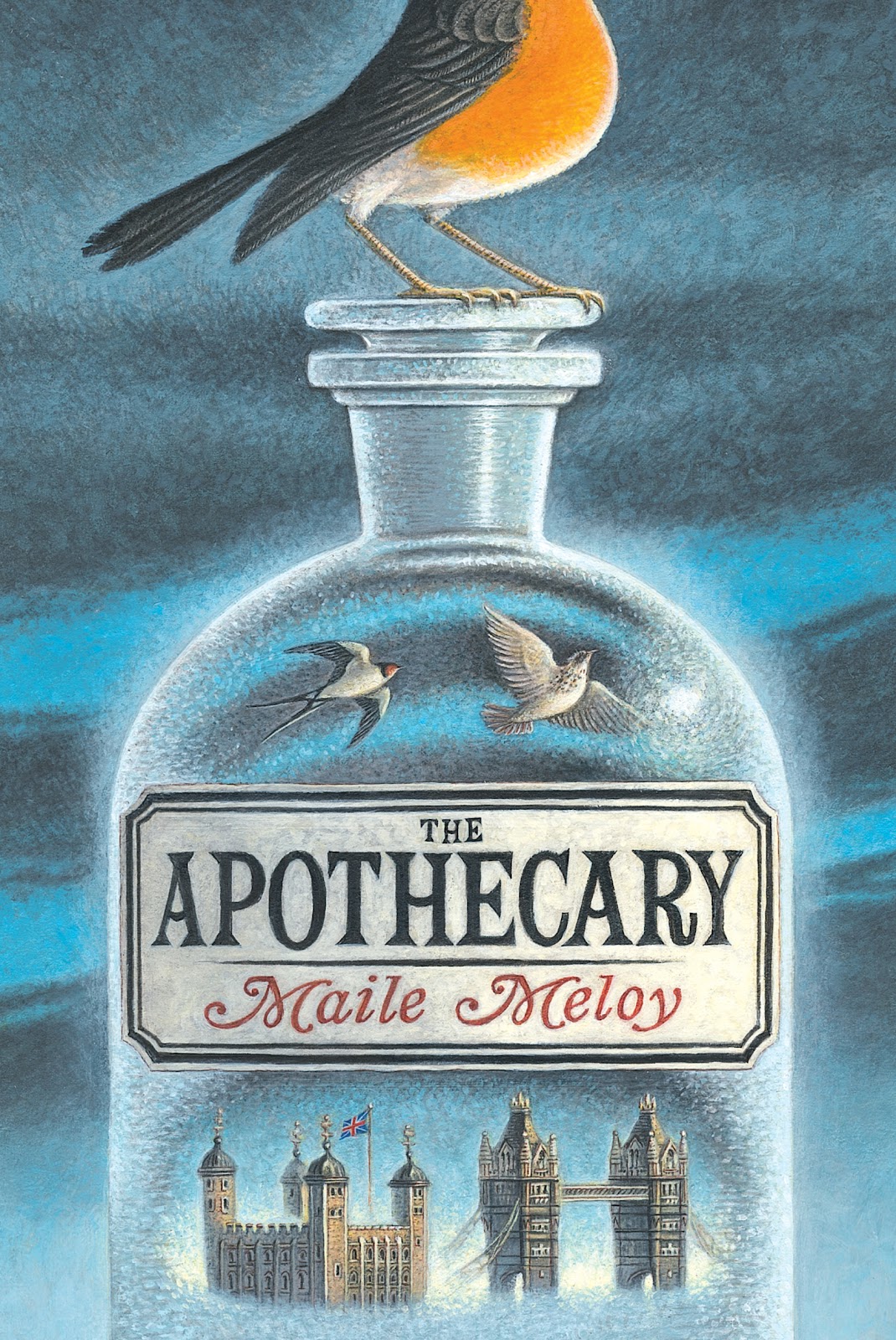
The Apothecary - Book Club Review

Friday, 23 December 2011

Everyday Kindness by Stephanie Dowrick - Reviewed by Walter Mason

Walter Mason is the author of Destination Saigon. You can find him online here

Stephanie Dowrick is by now one of the legendary figures in the world of Australian books. A pioneering feminist publisher in 1980s London, Dowrick transformed herself, first into a novelist and then into a wildly successful writer on psychology, personal growth and, in latter days, spirituality. She has grown and developed with her readership, at times leading and at times listening to the lives of ordinary people. In her latest book, Everyday Kindness, she takes up the simplest concept and creates one of the most inspiring and original books I have read in a very long time.

Born out of her collected columns for the Sydney Morning Herald’s Good Weekend magazine, Stephanie soon detected a theme in her brief writings – the everyday concerns about kindness and respect, and the great difference the cultivation of these can make in our lives. And so she edited, extended and enlarged upon these years of observation, creating this exquisite book devoted to such an unexpected topic. The short, sharp chapters, so perfect for picking up and reading whenever you have a spare moment, are at turns surprising, meditative and inspiring.

And I just kept turning and turning through the pages, filled with ideas about how I could make improvements in my life, and how I could afford to extend more kindness in almost every daily encounter. Dowrick encourages us to shift away from the obsessive worry and constant self-concern that causes so much pain in our lives. By re-focusing on the needs of others, and on the finding of solutions rather than the cultivation of complaints, we grow as people and with that growth comes a concomitant increase in self-esteem. Oddly, the self-love we so desperately search for comes to us more easily when we are actively expressing our love of others.

Encouragement, gratitude and appreciation – those wonderfully old-fashioned virtues that many of us have forgotten – are built up in the book, not just as tools of personal growth and social cohesion, but as ends in themselves. There is a tremendous psychic value, Dowrick suggests, in being joyful about others’ successes and triumphs. In doing so we are answering one of the most fundamental human needs – the desire to be appreciated and valued.

Everyday Kindness
is essential reading, I think, for anyone who is worried about the state of the world and interested in ways that we can make it better. Its focus is on the personal, on the direct relationships that we are most capable of influencing and improving. Dowrick’s voice is refreshing in its simplicity and in its careful regard for compassion and the necessity of building up our personal power through supporting and respecting others.
 
 Everyday Kindness is available here
Shearer's Bookshop is holding an event with Stephanie on Wednesday 8th February 2012 at 7.30pm. Tickets are $10, you can book on (02) 9572 7766

Monday, 14 November 2011

How I Became a Famous Novelist: Review

Steve Hely has, according to the cover of his debut How I Became a Famous Novelist, written for American Dad, The Office, 30 Rock and David Letterman. So there's an expectation going in that this is going to be a gag-fest, and at first it seems to be. But the gags later subside as the book becomes a clever and merciless parody of the publishing industry.

Pete Tarslaw is pushing 30, extremely single (possibly due to his lack of personal hygiene) and stuck in a terrible job, where he writes essays for international college students who don't have a good grasp on English. He is contemptuous of the popular novels that line bookstore shelves, and thinks of the authors as charlatans who manipulate the emotions of a gullible book-buying public.

So he decides to join their ranks by writing the most commercially appealing book he can. The finished result, The Tornado Ashes Club, is a truly awful book that becomes an overnight sensation. All that's left after Pete's meteoric rise is his spectacular fall.

I was laughing out loud by page one. The gags are fast and funny as Pete describes his lifestyle and his work. It gets even funnier as he introduces the authors that populate the story (all parodies of actual authors, the fun is in working out who's who). There are some truly terrible extracts from the fictional books that the plot centres on, including Pete's own novel - Steve Hely is a great writer to be able to pull those extracts off.

The publishing process and the industry in general is mercilessly pilloried - one character who is an editor admits that she doesn't even know the difference between a good and bad book. And the scene where Pete sits in a large bookstore and analyses what he thinks readers want based on how they look is gut-bustingly funny.

How I Became a Famous Novelist is a comic novel that really works due to the quality of Steve Hely's writing and the amount of material he has to work with. Readers, writers, editors, publishers and especially critics are parodied, and parodied well, to the full extent of Hely's comic powers. By far the funniest book to be published in 2011.

How I Became a Famous Novelist is also the First Tuesday Bookclub pick for December.

Reviewed by Mark

How I Became a Famous Novelist is available here.

You can read an interview with author Steve Hely here.

Wednesday, 9 November 2011

The Sense of an Ending: Review

Having never read a Julian Barnes novel before, (despite the efforts of Barbara to get me to read Arthur & George), I came to this novel with very little idea of what to expect. I knew Barnes' reputation, and I knew, of course, that The Sense of an Ending had just won the Booker Prize. So it was an absolute pleasure to be enthralled by this wonderful book.

The story is divided into two parts. In part one, the protagonist, Tony Webster, recounts how he first met his brilliant friend Adrian Finn at school. Tony later fell in love with a woman who he had a difficult relationship with, when she later spurns his affections and instead opts for Adrian, Tony is left bewildered, angry and heartbroken. In part two, Tony is over 60 years of age and is forced to reflect on his friendship with Adrian and his relationship to the woman he loved when events bring him into contact with that world once again.

But more than anything, Tony is forced to face himself. Who was he as a young man? How reliable is his memory of that time? How reliable is his memory of himself? Will he ever truly understand how he is perceived by others and how his actions impacted them? The novel is beautifully written, and due to its length (only 150 pages), not a single word is wasted. It's all about memory, age, identity and history. So much is packed in, but it all fits together so well.

I read it over the course of a day, and as soon as I had finished I started it again, reading the entire first part. This was already a completely different experience. The Sense of an Ending is a wise novel that demands your attention and rewards multiple readings.

Reviewed by Mark


The Sense of an Ending is available here.

Wednesday, 10 August 2011

France Month: Review - The French Wallander...

I recently listened to a podcast from the books section of The Guardian. Their literary reviewer was on a quest for the French equivalent of Henning Mankell's Wallander series, he believed he had found it in Fred Vargas. So I decided to have a look at Vargas' first novel, The Chalk Circle Man.

The story introduces Jean-Baptiste Adamsberg, a unique detective who has just arrived in Paris. While he deals with his usual cases he takes an interest in a series of chalk circles that have started to appear on the streets of the city. Nobody knows who is drawing them or why, they are always centred around objects on the pavement and appear in the dead of night. Adamsberg is convinced that they will lead to something sinister and soon enough a murdered woman is found within one.

The story is short, tense and enthralling. Adamsberg is a wonderful character whose methods and habits irritate his fellow officers, but he's a natural detective. He works more on instinct than deduction, which on the surface may seem frustrating, but his mind is brilliant and unique. The other characters that populate the novel are wonderfully eccentric including a marine biologist who likes to follow people and an antisocial blind man. I especially like Adamsberg's partner, who confesses his alcoholism at their first meeting by telling Adamsberg that he'll be 'no good after 4 o'clock.'

I must at this point reveal that I've never read any of the Wallander novels, so I can't comment on the comparison. But I can report that The Chalk Circle Man introduces a great detective in a great story that's perfect for anyone who loves a good detective yarn. It's a credit to Fred Vargas that she created a novel that's funny, dark, unpredictable and original.

Written by Mark

Tuesday, 19 July 2011

A Game of Thrones: Before I Read the Book

By now, most people would have experienced or at least heard about the Game of Thrones. For those of you haven’t, Game of Thrones is the first book in the fantasy series A Song of Ice and Fire written by George R R Martin. The recent buzz around the series is because of two things: firstly, HBO has adapted the book into an incredible series that started airing in Australia this month; secondly, the much anticipated fifth book in the series, A Dance with Dragons was released last week. As a staunch believer in reading the book before seeing the film or the television show, I must confess that I have not read Martin’s novels. Furthering the literary shame, I loved HBO’s Game of Thrones so much that I am afraid to read all the books in case I ruin my experience of Season 2. Finding myself in this blasphemous predicament, all I can do is explain how I arrived here and hope that you understand.

It began when I noticed altered behavioural activity of some friends.Things like:
  • forced enthusiasm for being among people
  • general tiredness – dark shadows around the eyes and frequent yawning
  • animated discussions with each other that most people found impenetrable and slowly backed away from
  • surreptitious and early departures from events
As an unashamed addict of most things HBO or Showtime, I recognised the symptoms of discovering a good series.  Getting my hands on this Game of Thrones, I put it on one night without any knowledge of what it was about. What proceeded was a euphoric blur of distant lands, political intrigue, suspenseful dialogue and action, and beautiful cinematography that took me well into the early hours of the next day. I had watched 6 one-hour episodes in a row.

In one night I had joined my disappearing friends in the world of The Wall, Winterfell, King’s Landing and the fight over the Iron Throne. I had become strangely sympathetic to Kahl Drogo (calling him ‘my little pussycat’) and passionately hateful of the Lannisters, except for Tyrion ...

What followed were ‘Medieval Mondays’ when each week my friends and I gathered to watch the latest episode. After a rocky start in which people who had read the books revealed crucial plot points to the shattering dismay of others, Mondays became the event that we all looked forward to. As I sat with my prescription glasses on and a throw rug draped over my lap in a living room with appropriately dimmed lights and the cone of silence in place, I realised I could reveal my inner nerd. It was a safe place.

The season finale came upon us all too soon. We celebrated with dinner and home-made medieval mulled wine. One hour passed in rapt silence. The suspense and excitement were palpable. As the final credits rolled and we returned to the real world, I had to quickly jerk my head back - I had a bleeding nose. Some might say that the next 15 minutes spent with a rolled tissue up my nose was because of the heat or an over-exposed blood vessel in my nasal passage, but to be honest, it was because Game of Thrones is that good.

I am about to read the first book to further fuel my obsession. As to whether I will read the second book, Clash of Kings before the second season comes out, I haven’t made up my mind. All I know that watching Game of Thrones was an unmatched experience and I don’t want to ruin the possibility of experiencing something like it again.

Written by Natalie

Monday, 4 July 2011

The Map of Time by Felix J. Palma

The book begins with a dramatic sense of tragedy as our protagonist Andrew puts a revolver to his head, unable to cope to the loss of his beloved who was horrifically murdered by Jack the Ripper. Yet after what appears to be a premature conclusion of horror and tragedy, an intervention by Andrew’s
cousin to an alternative universe of time travel takes the reader on a journey through a Victorian period of science fiction. In fact it reads almost like it could be some sort of cleverly crafted Fan Fiction, as famous figures of that time including Jack the Ripper, H.G Wells and Joseph Merrick the Elephant Man with the surgeon Frederick Treves make a solid appearance, and become central to the novel’s mish-mash of interweaving genres, stories of alternate historical realities and of the impossible. I was surprised the famous fictional character Doctor Who didn’t make an appearance as Captain Derek Shackleton (No reference to the bowler or the explorer) fights the Automatons (that being autonomous robots) in the desolate and post apocalyptic year 2000. All made possible to venture into such a time due to Murray’s Time Machine, its essence discovered in a remote village in East Africa.

Quite a difficult book to really pigeon hole, I enjoyed the rollicking journey through different chapters of fictional and non-fictional characters - I particularly enjoyed the encounter with HG Wells and Joseph Merrick, which historically didn’t play out, however almost felt as it did with the historical detail encapsulated in this novel. If you’re a fan of HG Wells and time travel science fiction with a genre mash of tragedy, romance, adventure and drama set within the Victorian period in England, then I would highly recommend it.

Written by Mark Heath

The Map of Time by Felix J. Palma is available from Shearer's Bookshop

Thursday, 30 June 2011

That Deadman Dance by Kim Scott

In his memoir, Kayang and Me, written with Aboriginal elder Hazel Brown, Kim Scott says,

“… ‘Indigenous writing’ may not even be a sub-category of Australian literature, and I don’t say that because many of its practitioners are working with narratives and forms which predate Australian literature. No, I say it because I have looked in bookshops for my own books and, failing to find them in the Australian Literature section, finally located them under ‘Australiana’.”

Thankfully, the divide between Indigenous and non-indigenous Australian writing has been giving way to an appreciation of good Australian writing, without labels. This has happened in no small part due to writers like Scott whose novel That Deadman Dance has won the Miles Franklin Award 2011. This is the second time Scott has won the award after tying with Thea Astley for the coveted prize in 2000 with Benang: From the Heart.

That Deadman Dance explores first contact between the English settlers, American whalers and Noongar people in south Western Australia, mostly through the eyes of the charismatic boy Bobby Wabalanginy. Bobby’s experiences with the ‘friendly frontier’ are one of many that show the brutality and deception, but also the loyalty, respect and love that existed in the varied relationships between and within communities of that time.

Scott challenges our perceived notions of Australian identity and history, especially drawing attention to how language and story can shape our understanding of one another. As Scott says, ‘I’d hope that [the novel] helps us recast relationships and rethink the way we relate to one another’. In this sense, That Deadman Dance is not only a story about the past, but how to see our way forward for the future.
That Deadman Dance has a distinctive voice and perspective that perhaps a lot of Australian readers have not come across before. As Scott’s memoir says, many Aboriginal writers work with forms that predate Australian literature, and in this novel the oral tradition of story and the fluidity of time play out wonderfully under the skill of Scott’s written words.

There were only three books shortlisted for the Miles Franklin Award this year, however the calibre of writing was not any less. That Deadman Dance has confirmed Scott as one of the most important voices of our time and there is no doubt his latest novel will become an Australian classic.

Written by Natalie 
That Deadman Dance is available from Shearer's Bookshop

Tuesday, 28 June 2011

The Ritual by Adam Nevill

I came across this new horror novel when our Macmillan rep handed me a copy. He knew I enjoyed genre fiction and the previous month I had gone gaga when he handed me a proof of Embassytown. My initial action was to add it to my 'to be read' pile, which is extensive. I knew I would get to it one day but put it off for some time because there was always something else grabbing my attention. Then I was struck down with a bad cold.

I spent two days on my couch feeling sorry for myself and I needed something escapist to take me out of my misery. I discovered this book in the pile and read the first line:

"And on the third day things did not get better."

Great opening. I had to keep reading. And as I read, becoming increasingly more absorbed I realised that this was a gem.

The story follows a group of four men who were friends at school and have recently reconnected. They're on a hiking trip in Sweden and take a shortcut through an old part of the forest. As usual with shortcuts in the horror genre, this is a big mistake - there is something ancient and terrifying waiting in that part of the forest. I can't really say more without spoiling the element of surprise, which really hooked me in and kept me on the edge of my seat.

Adam Nevill is a great writer, his sense of place is impeccable. He really sets a dark and haunting tone very early on, simply through his description of the forest and the way it affects the characters. I was there with them as they trudged on through their ordeal. The second element to make this novel so strong is the characters and their relationships. They are men who were friends. Trapped out in the forest they realise how little they now have in common, how much has changed since they were young and the petty politics of the group threatens to consume them. The protagonist is flawed, full of anger, regret and jealousy, both loathing and loving himself. The final element is the surprising nature of the narrative. The novel is written in such a tense and engrossing way that there are plenty of surprises - escpecially in the third act.

The third act of this book shouldn't work but it does. That's all I can say without giving away what happens. I found myself trying to anticipate what the end would be, and I felt it drawing nearer even though there were still well over 150 pages to go.

This book is well worth a look. Tense, genuinely scary, dark and menacing with some wonderful evocation of place and brilliantly flawed characters. I haven't had a better experience with a horror novel in years.
The Ritual is released in July and is available to preorder now at Shearer's Bookshop

Friday, 10 June 2011

A Few Books I've Been Reading

I am an unapolagetic China Miéville fan, and was lucky enough to meet him when he came to Sydney last year. At that point, he had just come off the back of two successful novels, The City and the City and Kraken, which was my favourite novel in 2010. Both of those books had propelled him a little more towards the mainstream and had garnered awards and praise from many critics. He is such an interesting writer, with books full of complex ideas and strange characters inhabiting a genre known as the new weird.

It's quite tough to outline what Embassytown is about in a concise manner. I found it to be his toughest read to date, there are some concepts that are, at times, difficult to get your head around and in true China fashion, he doesn't go in for lazy exposition. The most concise way I can outline the plot is to say that it's set in the distant future at the edge of the explored Universe and is about communication between two species with vastly different ways of thinking about language. It's huge, bewildering, engrossing. It's a rare book that is really an amazing experience. At the end I was left wondering whether this book was a true expression of one of the most powerful imaginations in modern writing, or just an academic experiment in genre fiction. Either way, I plan on visiting Embassytown again at some point.

Still heavily in genre territory, I recently took a look at The Last Werewolf by Glen Duncan. I'm not into paranormal creature novels as a rule, but I started to hear some amazing things about it and then a Twilight fan told she me hated it. I had no choice but to read it then.

The protagonist is a 200 year old werewolf named Jacob Marlowe (awesome name) who is, as the title suggests, the last of his kind. But Jacob is tired of life, he's been around a very long time and has experienced so much that he's had his fill. Those who have hunted werewolves to the brink of extinction are going to come for him at the next full moon. Needless to say, a few things occur in the interim that make Jacob change his mind (I won't say what as it would majorly spoil the plot). Contrary to my Twilight friend's opinion, this is a great read. Jacob is a wonderfully heavy-drinking, chain-smoking character and the book is dark, funny, violent and explicit. With nary an angsty teenage vampire in sight.

This morning I finished reading The Psychopath Test by Jon Ronson, author of The Men Who Stare at Goats. It starts off with an intriguing premise, several academics contact Jon to enlist his help in tracking down the person who has sent them a mysterious book. The book seems to be a clue or full of clues to a larger puzzle. This mission winds up taking Jon on an exploration of the madness industry.

'The psychopath test' of the title is a checklist used by doctors to determine whether someone meets the criteria for being determined a psychopath. Jon applies the test to prison inmates, powerful business men and himself, questioning definitions and categorisation and the creation of such checklists along the way. The book is written in an anecdotal style, which makes it quite engaging and leads to some unexpected turns and revelations. It's entertainingly written, quite satirical at times, but sure to make readers think more deeply about the issues involved.

So those are a few books I've read recently. They all seem to deal with insanity in some form or another, which might be worrying...

Written by Mark

Feel free to leave a comment if you'd like to share with us any books you've been reading lately.

Wednesday, 13 April 2011

The Fifth Witness by Michael Connelly

I opened the new Michael Connelly novel with great enthusiasm and the writing and the plot didn’t let me down. The Fifth Witness is the fourth legal thriller featuring attorney Mickey Haller. Many more people are familiar with Mickey since the film The Lincoln Lawyer was released with Matthew McConaughey brilliantly portraying the irrepressible Mr Haller. The plot of Michael’s novel is timely as it centers around a massive problem in America at the moment, the foreclosure of housing loans.

Mickey’s business is suffering due to the recession and he takes on a case when Lisa Trammel, who is fighting hard to keep her home, receives a restraining order from her bank. Soon after taking on the case Lisa becomes the prime suspect when banker Mitchell Bondurant is murdered. Most of the novel takes place in a courtroom where Michael Connelly’s expertise as a writer of courtroom dramas comes to the fore. There are many twists and turns with evidence being submitted and quashed and the suspense builds at a steadfast and electrifying pace to a dual climax with the killer exposed and Mickey announcing a change of direction in his career.

How Michael Connelly manages to nail two high standard novels a year is mind blowing. One little quip on page 115: Clegg, a film producer, is thinking of including Mickey in a movie on the life of Lisa Trammel. He muses “I was thinking of Matthew McConaughey. He’d be excellent. But who do you think could play you?” To diffuse the situation Mickey replies “You’re looking at him Clegg”.

In the back of the novel there are two chapters from the next Connelly novel The Drop to be published in late October this year. This time Harry Bosch is back working with the Open-Unsolved Unit first mentioned in The Closers in 2005. I was hooked after the first two chapters ….. roll on October! Finally just a taste of trivia for people who love the TV series Castle. Michael Connelly, together with authors James Patterson and the late Stephen J Cannell, make occasional guest appearances in the series as Castle’s poker buddies.

Written by Barbara

Friday, 11 February 2011

Full Dark, No Stars by Stephen King

Full Dark, No Stars is an extraordinary work of fiction. It's a collection of four novellas, each linked by the concept of the shadow-self that lurks within us all and the idea of revenge. King is no stranger to the novella and has released several collections over the years such as Four Past Midnight and Different Seasons (which spawned three of his most respected works, Rita Hayworth and Shawshank Redemption, Stand by Me and The Mist). This collection includes 1922, a confession written by a farmer who murdered his wife, Big Driver, about a mystery author who uses the conceits of her genre in an attempt to take revenge on the man who attacked her, Fair Extension, about a terminally ill man who makes a deal with someone to extend his life, and A Good Marriage in which a loving wife discovers that her husband is hiding a horrific secret...he may be a notorious serial killer.

King's powers as a writer have been resurgent ever since the publication of Cell, a techno-horror about a disease spread by mobile phones. This was followed by Lisey's Story, a romance about a woman dealing with the death of her husband (and the fantasy world he had sometimes lived in), Duma Key, an underrated book about a haunted island and a short story collection, Just After Sunset. But it was the publication of Under the Dome that cemented King's resurgence. One of his bestselling novels since he was at the height of his powers, it's a thrilling page-turner with a wonderfully simple idea at its heart. If you haven't read it yet, do yourself a favour and pick up a copy - it's among the best books he's ever written. But back to Full Dark, No Stars.

Each of the stories in this collection are strongly readable. They're all firmly rooted in the horror genre and involve murder, haunting, revenge, deals with the devil and more murder. King paints with a brush that's been firmly dipped in blood. But it's not cheap or sensationalist. King doesn't go for over the top gore and he's not trying to shock anyone. The stories slowly build to their climaxes, increasing in intensity until you simply cannot put them down.

Choosing a favourite is difficult. I loved the evocation of a harsh life in rural '20s America in 1922. The pace of Big Driver is quite frankly perfect and leads to a surprising finale. Fair Extension is a clever riff on King's Needful Things, and while I initially though it to be the weakest link in this collection it has really stuck with me. But I have to choose A Good Marriage as my favourite. It asks the question of how well you can really know someone, even after 27 years of marriage - and then asks some very difficult questions of how to act when someone you deeply love turns out to be someone deeply disturbing. It's about all the little details that make up a marriage and what it means when it turns out that someone has been misrepresenting themselves. Does the marriage dissolve instantly? Can you shut off your feelings like a tap? And what, ultimately, should you do?

An idea that is sometimes used in relation to Stephen King is that he has 'transcended genre', like genre is somehow a hindrance to him as a writer, a disease that he needs to defeat. Or that he has somehow become his own genre. But this misunderstands genre in my opinion. It somehow implies that genre is necessarily limiting and that to challenge the tropes of genre is to transcend it. But genre can be deep and diverse, and for all the intricacies and layers that are in A Good Marriage it is still a horror story. It doesn't leave horror behind for some purgatory that's halfway between genre and literature, it proves that stories can be both. Masterful writing of the style King produces is all about good storytelling. And it's organic - he doesn't bung it on or play with narrative just for the sake of it.

Full Dark, No Stars is a wonderful collection from one of the best storytellers around. Read it and enjoy it.

Reviewed by Mark